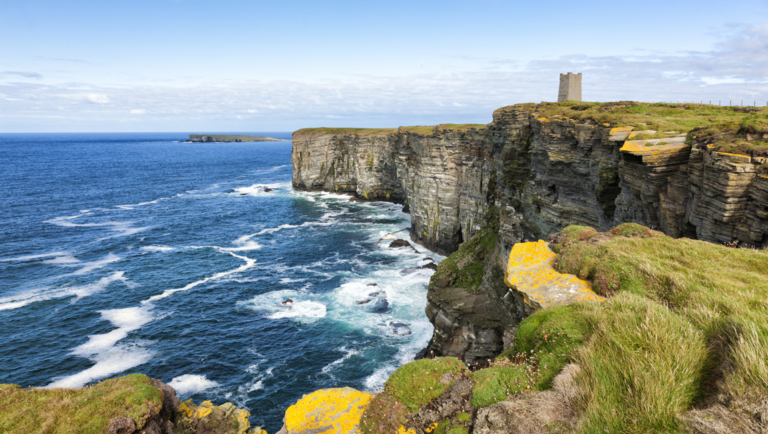
The Pentland Firth: Scotland’s Powerful and Historic Waterway
The Pentland Firth is a dramatic and treacherous stretch of water that separates the Scottish mainland from the Orkney Islands. Known for its strong tidal currents, rich marine life, and historic significance, this northern gateway between the Atlantic Ocean and the North Sea is a must-see for visitors exploring Caithness and the North Coast 500.
A Waterway of Great Power
The Pentland Firth is one of the most powerful tidal streams in the world, with currents reaching speeds of up to 16 knots (18 mph). The meeting of the Atlantic and North Sea creates:
- Powerful whirlpools and overfalls – Such as the famous Swelkie, which was once feared by sailors.
- Tidal races and standing waves – Making it one of the most challenging passages for seafarers.
- A major site for renewable energy research – Due to its incredible tidal power potential.
A Paradise for Wildlife Lovers
The waters of the Pentland Firth are teeming with marine life, making it a fantastic place for wildlife spotting. Keep an eye out for:
- Orcas (killer whales) – Frequently seen hunting seals in the area.
- Dolphins and porpoises – Playful and often seen near the coast.
- Grey and harbour seals – Basking on the shores and small islands.
- Seabirds – Puffins, guillemots, razorbills, and gannets are common sights.
Several boat tours operate from Thurso, John O’Groats, and Orkney, offering incredible wildlife-watching opportunities.
Historic and Legendary Waters
The Pentland Firth has long been a key route for Viking explorers, traders, and Scottish mariners. Some of its notable history includes:
- Norse Influence – Vikings once ruled over Caithness and Orkney, using these waters for their journeys.
- The Battle of the Pentland Firth (1588) – A Spanish Armada ship was wrecked off the Caithness coast.
- World War Naval Operations – The area played a key role in both World Wars, with Scapa Flow in Orkney serving as a major Royal Navy base.
The name ‘Pentland’ is believed to have Norse origins, meaning “Pictland Fjord,” referring to the Picts who once lived in northern Scotland.
Best Places to View the Pentland Firth
For visitors looking to experience the beauty and power of the Pentland Firth, some of the best viewpoints include:
- Dunnet Head – The northernmost point of mainland Britain, offering panoramic sea views.
- John O’Groats – A famous landmark with breathtaking views of the firth.
- Thurso Beach and Harbour – A great spot to watch the waves and passing boats.
- Duncansby Head – Home to dramatic sea stacks and bird cliffs.
Practical Information
- Best Time to Visit: Summer for wildlife spotting, winter for dramatic storms and powerful waves.
- Accessibility: Most viewpoints are easily accessible by car or foot.
- Boat Tours: Available from John O’Groats, Orkney, and Caithness for a closer look at the wildlife and coastline.
A Must-See Natural Wonder of the Highlands
Whether you’re drawn to its rich history, incredible wildlife, or raw natural power, the Pentland Firth is an essential stop for anyone exploring the Scottish Highlands and Islands. It’s a place where nature, history, and adventure come together in one of the most breathtaking settings in Scotland.