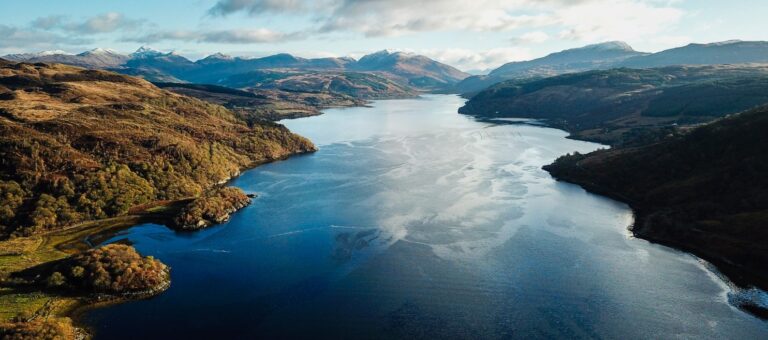
Discover Loch Sunart: Scotland’s Hidden Highland Treasure
Loch Sunart is a stunning sea loch located on Scotland’s west coast, stretching over 19 miles from the Sound of Mull to the village of Strontian. Surrounded by rugged hills, ancient woodlands, and rich wildlife, Loch Sunart is one of the most scenic and serene bodies of water in the Scottish Highlands. As part of the Sunart Marine Protected Area, this loch is also a key site for nature conservation, making it an excellent destination for wildlife enthusiasts, kayakers, and those seeking a peaceful escape in the heart of the Highlands.
A Rich Marine Habitat
Loch Sunart’s clear, sheltered waters are home to a variety of marine life, including seals, porpoises, and otters, which can often be spotted along the loch’s shoreline. The loch is also one of the best places in the UK to see sea eagles soaring overhead, while the surrounding woodlands host a wide range of bird species, including rare sightings of golden eagles. The loch’s biodiversity has led to its designation as a Marine Protected Area, aimed at preserving the rich ecosystems and ensuring that this unique habitat remains untouched by pollution and overfishing.
Outdoor Activities and Scenic Exploration
Loch Sunart’s calm waters are ideal for a variety of outdoor activities, particularly kayaking and canoeing. Paddling along the loch offers visitors the chance to explore hidden coves, rocky shores, and secluded beaches, all while taking in the breathtaking scenery of the surrounding hills and woodlands. The loch is also a popular spot for fishing, with anglers targeting species such as mackerel, sea trout, and pollock.
Hikers will find plenty of trails around the loch, offering a mix of woodland walks and hill climbs. The nearby Ariundle Oakwood National Nature Reserve is particularly noteworthy, home to one of the few remaining remnants of ancient oakwood forest in Scotland. Walking through these lush woods, you’ll experience the magic of one of Scotland’s oldest natural landscapes.
Historical and Cultural Significance
Loch Sunart is steeped in history, with the surrounding area dotted with ancient monuments, castles, and the remnants of crofting communities. One of the most significant sites is the village of Strontian, at the eastern end of the loch, which gave its name to the element strontium. The village itself is a charming spot to visit, with friendly locals and scenic views over the loch.
The area around Loch Sunart also has strong connections to Scotland’s Gaelic culture, with many local place names derived from Gaelic. Visitors can immerse themselves in the Highland way of life, exploring local craft shops, distilleries, and traditional music sessions held in nearby pubs.
Accessing Loch Sunart
Loch Sunart is easily accessible by car from both Fort William and Oban, with the scenic route along the Ardnamurchan Peninsula offering some of the most beautiful driving in Scotland. For those looking to explore the loch by water, there are several boat tour operators that offer wildlife-watching trips, or you can bring your own kayak or canoe to navigate the loch’s tranquil waters.
Loch Sunart is more than just a scenic spot; it’s a gateway to the wild beauty and rich history of the Scottish Highlands. Whether you’re exploring its calm waters, walking through its ancient woodlands, or simply enjoying the peaceful surroundings, Loch Sunart offers an unforgettable experience for nature lovers and outdoor enthusiasts alike.