Eagle Stone, Strathpeffer: A Pictish Mystery in the Highland Hills
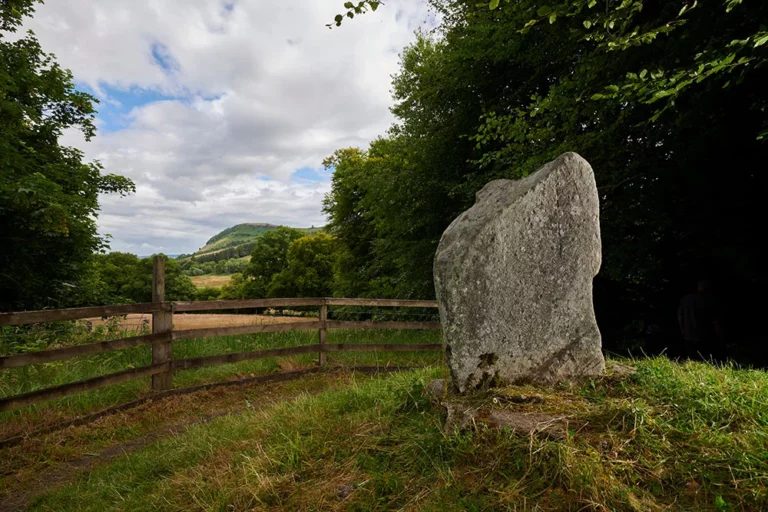
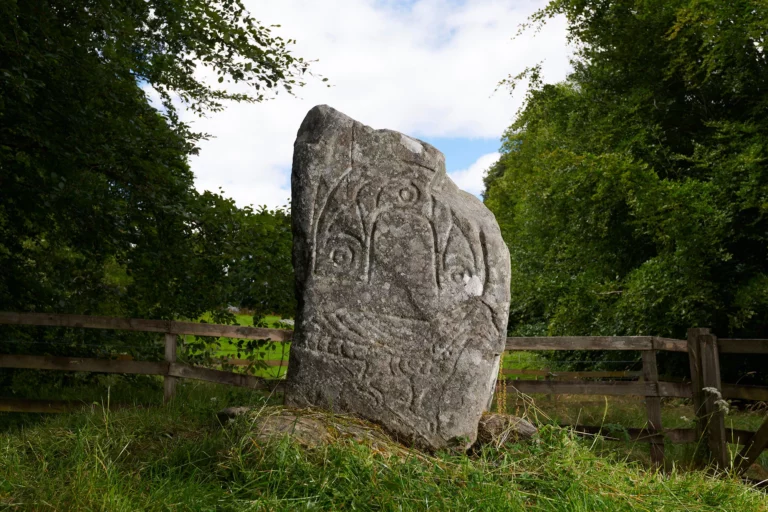
Perched on a gentle slope above the village of Strathpeffer, the Eagle Stone (known in Gaelic as Clach an Tiompain) is a striking Pictish symbol stone believed to date back to around the 7th century AD. Carved with mysterious markings, including a bold image of an eagle, the stone offers a rare and atmospheric glimpse into the ancient culture of the Picts, who once ruled much of northern Scotland.
A Window into the Past
The Eagle Stone stands about 1 metre high and is carved with two distinctive Pictish symbols:
-
A large, stylised eagle near the top—possibly representing power, nobility, or a tribal emblem
-
A horseshoe or arch shape beneath it, the meaning of which remains debated among archaeologists
Its exact purpose is unknown, but it may have served as a territorial marker, a commemorative monument, or even a ritual object. Its elevated position suggests it was meant to be seen—perhaps by those passing along ancient Highland routes.
A Peaceful Highland Walk
Reaching the Eagle Stone is part of the experience. A waymarked woodland trail from Strathpeffer climbs gently through Blackmuir Wood, offering:
-
A peaceful forest walk, suitable for most fitness levels
-
Opportunities to spot red squirrels, songbirds, and even deer
-
Expansive views across the Strathpeffer valley and surrounding hills
The stone sits quietly in a grassy clearing—often surrounded by wildflowers—adding to its mystique.
Myths and Local Legend
Like many ancient stones in the Highlands, the Eagle Stone is wrapped in folklore. One tale claims that if the stone ever falls three times, disaster will come to the surrounding land. According to local tradition, it has fallen twice—though that may be village lore rather than historical fact!
Some believe it marks a burial site or the location of a Pictish victory, while others connect it symbolically to nearby Knockfarrel Hillfort, adding to its aura as a spiritual or cultural waypoint.
A Hidden Highland Treasure
The Eagle Stone makes a lovely detour for visitors to Strathpeffer, especially for those with an interest in:
-
Pictish history and archaeology
-
Myth and folklore
-
Scenic Highland walks with a sense of mystery
It pairs well with a visit to Blackmuir Wood, Knockfarrel, or Castle Leod, and is a quiet, contemplative spot for a break from the road.